
Commercial Service
Commercial Blinds for New Construction
Horizontal, vertical and faux-wood blinds, specified for commercial buildings and installed at building scale by managed crews.
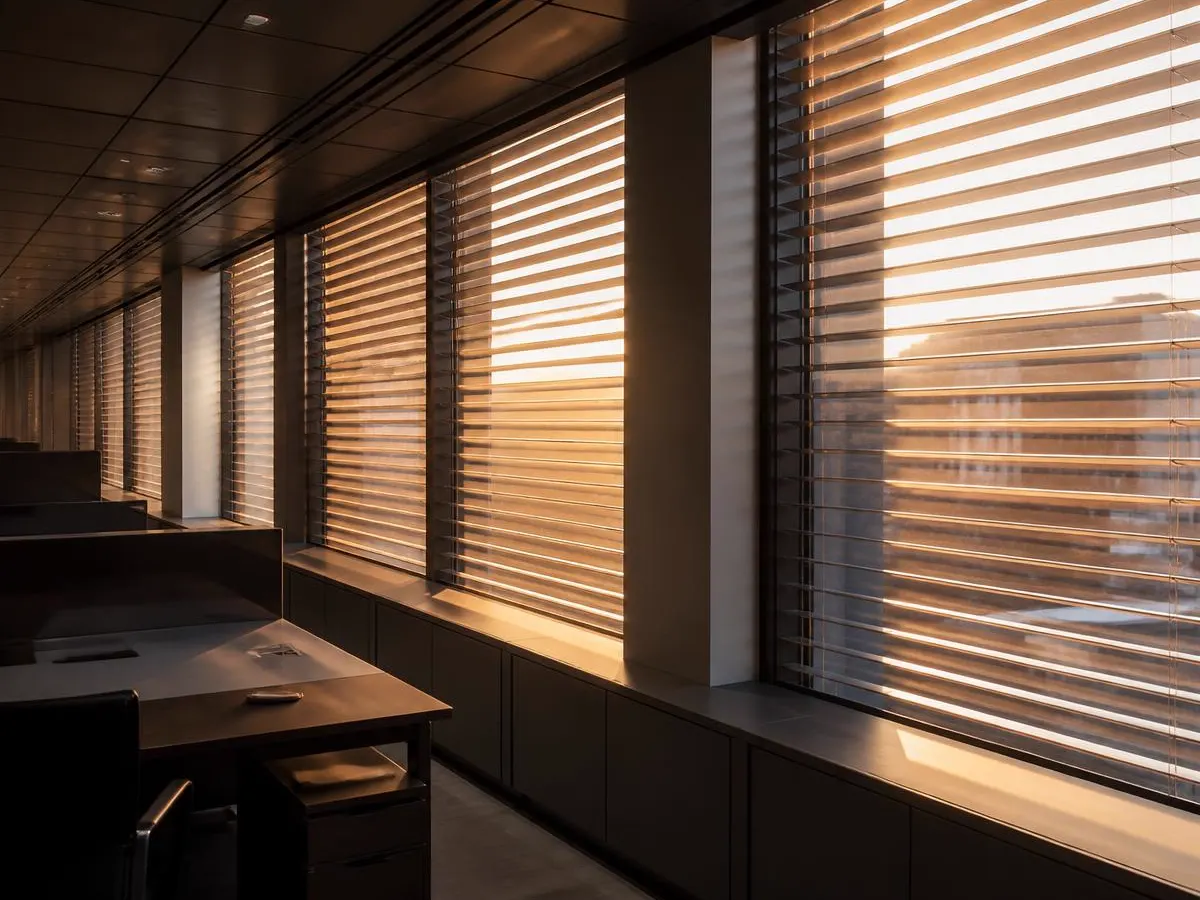
The three blind types that cover most commercial specs
Horizontal aluminum blinds remain the workhorse of commercial construction. In 1" and 2" slat widths, with heavy-duty headrails, they are what most school districts, clinics, government buildings and office interiors specify because they are inexpensive per opening, durable under daily use, and easy to replace slat-by-slat rather than unit-by-unit. The difference between a good install and a callback is almost always bracket selection and headrail support at wide openings — not the blind itself.
Vertical blinds hold their place on tall glazing, sliding door assemblies and openings where a horizontal product would be impractical to raise. They are common in multifamily patio doors, older office retrofits and institutional buildings with floor-to-ceiling glass. Track quality and carrier spacing determine whether they still operate two years after turnover, which is why we install the specified track rather than a visually similar substitute.
Faux-wood blinds appear where the interior design wants the appearance of wood without the cost, moisture sensitivity or maintenance. Multifamily units, hospitality corridors, senior living and executive office suites use them heavily. They are heavier than aluminum, so headrail support and mounting substrate matter even more, particularly on drywall returns without solid blocking.
How we execute a commercial blind package
Every package starts with the drawings. We take off the window schedule, confirm quantities against the elevations, price the specified product and issue a written scope letter stating what is and is not included. After award, we produce submittals — product data, finish samples, warranty information — for the architect's review under Division 12 21 00.
Before install, we field-verify openings against the approved schedule wherever the schedule allows. Field verification is the cheapest insurance in this trade: a pocket detail that changed, a drywall return that was framed differently than drawn, or an added window in a revision can turn a clean install into a re-order if nobody catches it.
Install runs on your sequence. Our crews protect finished surfaces, keep the work area clean, and install consistently so that a hundred classrooms look like one crew did all of them. We walk the punch with your superintendent, correct items before demobilizing, and deliver warranty documentation, operation instructions and attic stock at closeout.
We install this scope across Texas and Oklahoma, including San Antonio, Austin, Dallas–Fort Worth, Waco, Oklahoma City and Tulsa. General contractors and dealers can review scope, submittal and insurance details on our For General Contractors & Dealers page.
Related: office blinds for corporate interiors and tenant build-outs.
Included in a commercial blind scope
- Plan take-off and written scope letter
- Division 12 21 00 submittals and finish samples
- Field verification against the approved window schedule
- Heavy-duty commercial headrails and specified brackets
- Phased installation on the general contractor's sequence
- Punch-list completion, attic stock and warranty documents
Send us the plans
We price from drawings and specification sections, provide submittals, and install on your schedule across Texas and Oklahoma.